
Currently, the global problem of antibiotic resistance is becoming increasingly severe, with multidrug-resistant “superbugs” posing a growing threat. Data shows that over 4 million people worldwide die from drug-resistant bacterial infections each year. In this context, bacteriophage therapy—specifically designed to “eliminate” bacteria—is regarded as one of the most promising alternative antibacterial treatments today, and its development and application are attracting significant attention.
Today, the 2025 Chinese Society of Biotechnology Bacteriophage Conference & the 8th China Bacteriophage Therapy Conference opened at Zhongshan Hospital, Fudan University. As one of the largest and most influential annual academic conferences in the field of bacteriophage research and clinical application in China, this event focuses on promoting the construction of a bacteriophage therapy system. It not only marked the milestone launch of two national key research and development projects but also injected “Chinese momentum” into addressing the global public health challenge of antibiotic resistance through comprehensive academic exchanges and talent development.
During the conference, the 2025 National Key R&D Program “Frontier Biotechnology” Bacteriophage Key Special Projects were jointly launched. These consist of two major initiatives: “Development of Safe and Efficient Engineered Bacteriophage Therapy Technologies and Clinical Research,” led by Zhongshan Hospital, Fudan University, and “Research on Key Technologies for Developing Safe and Efficient Bacteriophage Preparations and Clinical Treatment of Drug-Resistant Bacterial Infections,” led by Beijing University of Chemical Technology. This program will bring together government, industry, academia, and research sectors to advance bacteriophage therapy from laboratory exploration to systematic clinical validation, strongly promoting the industrialization and standardization of bacteriophage therapy in China.
Professor Zhu Tongyu explained that bacteriophages are viruses that infect microorganisms such as bacteria and fungi and are widely found in nature, particularly in environments rich in bacteria, such as sewage. Unlike antibiotics, bacteriophages target only specific types of bacteria and do not harm human cells, making them highly promising as novel antibacterial agents. They are especially suitable for treating infections caused by multidrug-resistant bacteria, offering new therapeutic approaches to the increasingly serious problem of antibiotic resistance. Since March 2008, 300 patients with drug-resistant bacterial infections have recovered with the help of bacteriophage therapy. These patients had previously used various antibiotics and were in a “no-treatment-available” predicament. After just two rounds of bacteriophage treatment, their infections were effectively controlled. With continued clinical practice, bacteriophage therapy has demonstrated broad application prospects.
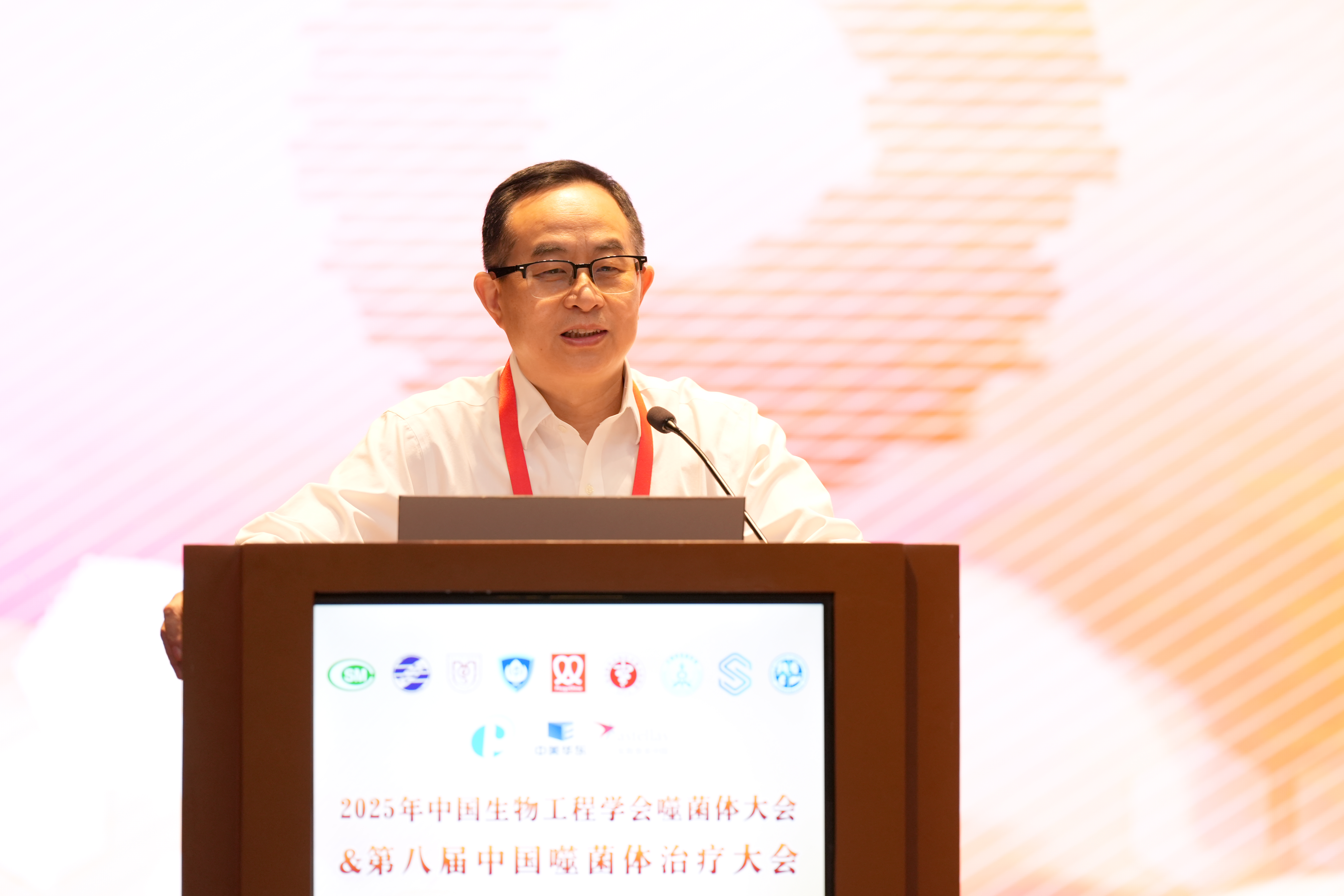
In recent years, bacteriophage-related research in China has entered an accelerated phase, showing initial successes in areas such as bacteriophage preparation development and personalized therapy. This conference is expected to drive progress in multiple dimensions of the bacteriophage field, including mechanistic research and technical standards, thereby collaboratively building a “Chinese pathway” for integrated development from laboratory to clinic—bringing hope to patients with drug-resistant bacterial infections in China.
Since its inception in 2018, the China Bacteriophage Therapy Conference has been successfully held seven times, attracting nearly a thousand experts from countries including China, Belgium, the United States, and Georgia, along with nearly ten thousand participants. It has become a benchmark academic platform in the field of basic and clinical bacteriophage research in China.