
October 10, 2024, Xenotransplantation
Greetings, Kidney Friends!
The role of pigs in addressing the critical challenge of organ shortage is strikingly prominent, nearly indispensable as allies. But what drives this choice, and why do we prefer pigs over other animals? There must be unique reasons and considerations behind this choice. We’ve discussed this previously, but if you’re interested, refer to: Why Pigs? The Undisputed Star of Xenotransplantation.Today, we’ll delve deeper into why monkeys, apes, and other animals popular among our readers aren’t chosen.
Part One
Although medical scientists have explored using primates like baboons and orangutans as sources for xenotransplantation, pigs have emerged as the priority in clinical trials due to several scientific reasons.
Part Two
First, pigs are more readily available than primates, which are typically found in zoos. Pigs reproduce rapidly and efficiently. A pig can produce 5–12 piglets per litter. It takes just 6 months for a pig to grow to a size suitable for human organ transplantation. In contrast, baboons require 3 to 5 years to reach sexual maturity, produce only one or two offspring per birth, and take 9 years to reach full size.
Part Three
Second, pig organs are highly similar to human organs in size and physiological function, making them ideal organ donors. As we know, transplantation involves connecting the blood vessels of the donor and recipient. The anatomy and blood circulation of a pig heart resemble those of a human heart, and pig kidneys and livers are comparable to human kidneys and livers, simplifying surgical procedures. Conversely, baboon organs are not large enough for adult human use, akin to a pony pulling a heavy cart, increasing the strain.
Part Four
Additionally, blood type compatibility is a key consideration in transplantation, but pigs have a relatively simple blood type system, whereas primate organs require more rigorous blood type matching. Simultaneously, pigs are less prone than baboons to acquiring zoonotic diseases following organ transplantation.
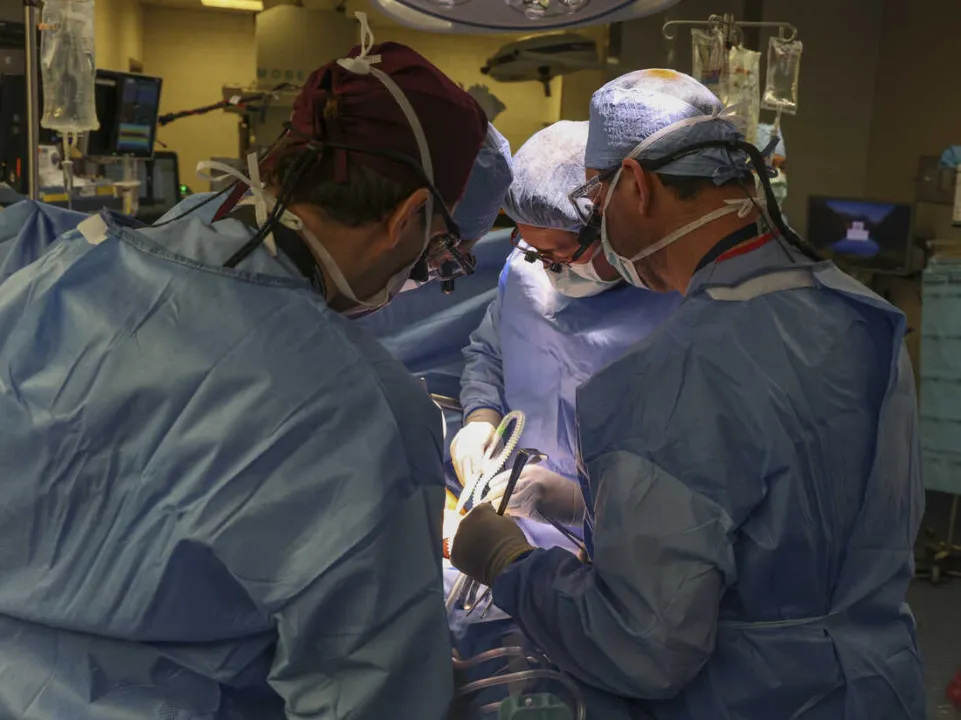
Image: At Massachusetts General Hospital in Boston, surgeons performed the first transplant of genetically modified pig kidneys into a living person. Michelle Roth/Massachusetts General Hospital
Overall, pigs were chosen as organ donors due to their similarity to human organs, rapid reproductive rates, and significant advancements in genetic engineering. Collectively, these factors position pigs as a groundbreaking option in xenotransplantation. With advancements in science and technology, we have reason to believe that pig organ transplantation will become increasingly widespread, offering hope to patients awaiting organ transplants.
That concludes today’s discussion. If you find this article helpful, please follow, like, save, share it with friends, or explore more about kidney transplantation. Until next time.
Scan the WeChat QR Code
Follow this public account

微信扫一扫
关注该公众号


