
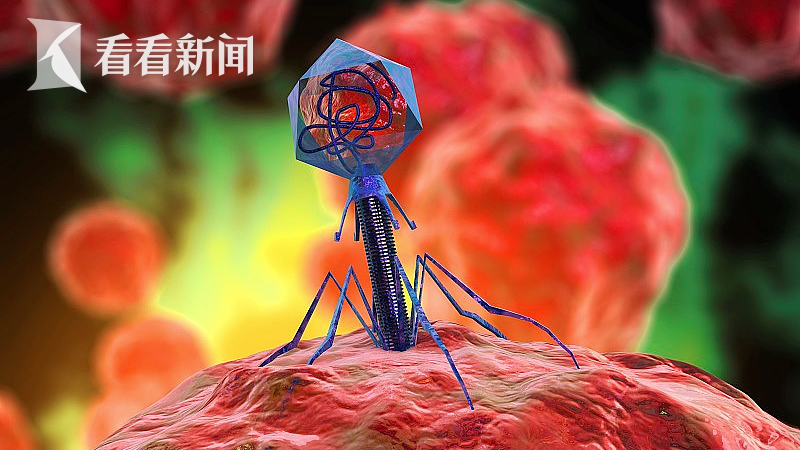
Globally, antimicrobial-resistant infections continue to rise, the efficacy of conventional antibiotics is progressively weakening, and the threat of “superbugs” is intensifying. This not only increases mortality risks associated with common illnesses such as pneumonia but also complicates medical procedures—including surgeries and chemotherapy—due to heightened infection risks. In this context, bacteriophage therapy, which precisely targets bacteria, has gained recognition as one of the most promising alternative antimicrobial strategies, attracting significant attention for its development and application.
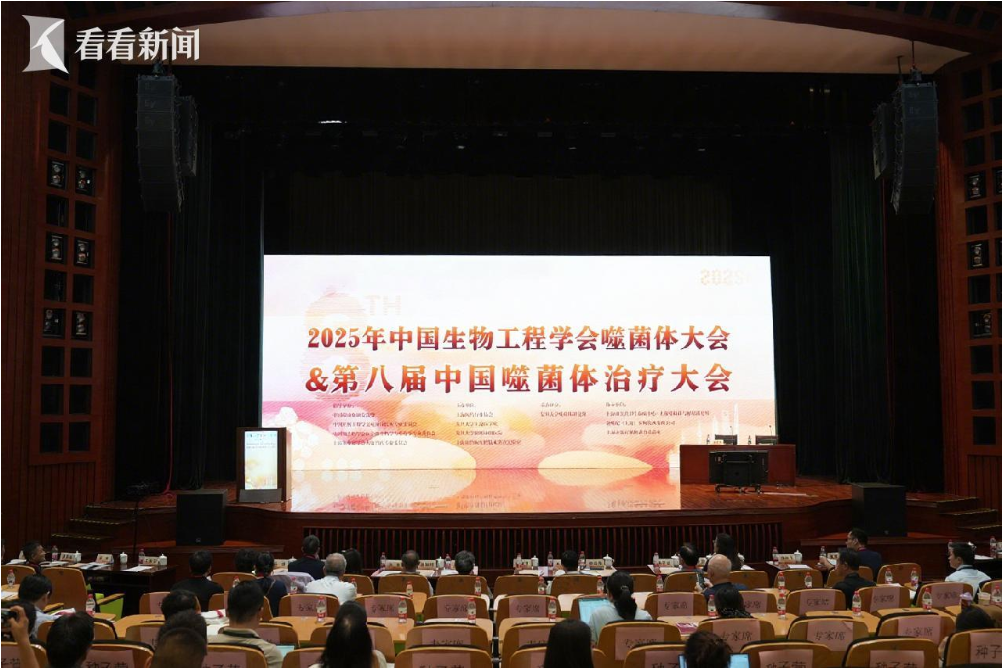
The 2025 Bacteriophage Conference of the Chinese Society of Biotechnology and the 8th China Bacteriophage Therapy Conference were held from August 19 to 23 at Zhongshan Hospital, Fudan University. As a key initiative aligned with China’s national strategy to combat microbial resistance, this conference stands as one of the most large-scale and influential annual academic events in China’s phage research and clinical practice. Focusing on advancing the development of a comprehensive phage therapy system, the conference marked the launch of two national key research and development programs. It also facilitated holistic academic exchanges and talent development, injecting “Chinese momentum” into addressing the global public health challenge of antimicrobial resistance. The event was attended by experts including Tian Jinqiang, Director of the Department of Life Sciences and Frontier Technology at the China National Center for Biotechnology Development; Guo Xiaokui, Vice Dean of the Global Health School of Shanghai Jiao Tong University Medical College; and Tong Yigang, Dean of the School of Life Science and Technology at Beijing University of Chemical Technology. Professor Zhu Tongyu, Vice Dean of Shanghai Medical College of Fudan University, Director of the Fudan University Phage Research Institute, and Academic Leader in Kidney Transplantation at Zhongshan Hospital, served as co-chair.
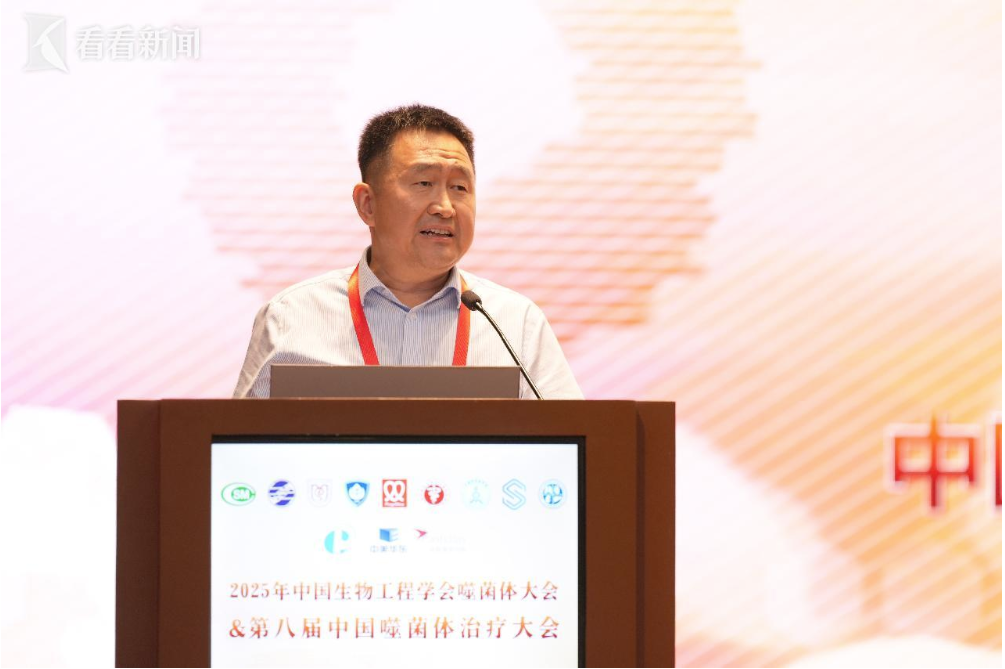
During the conference, the 2025 National Key R&D Program “Frontier Biotechnology” Bacteriophage Special Projects were jointly launched. These consist of two major initiatives: “Development of Safe and Efficient Engineered Bacteriophage Therapy Technologies and Clinical Research,” led by Zhongshan Hospital, Fudan University, and “Research on Key Technologies for Developing Safe and Efficient Bacteriophage Preparations and Clinical Treatment of Drug-Resistant Bacterial Infections,” led by Beijing University of Chemical Technology. By integrating resources from government, industry, academia, and research sectors, these projects signify China’s transition from laboratory exploration to systematic clinical validation in the field of phage therapy. This effort is set to accelerate the industrialization and standardization of phage therapy domestically and promote the development of internationally influential Chinese solutions.
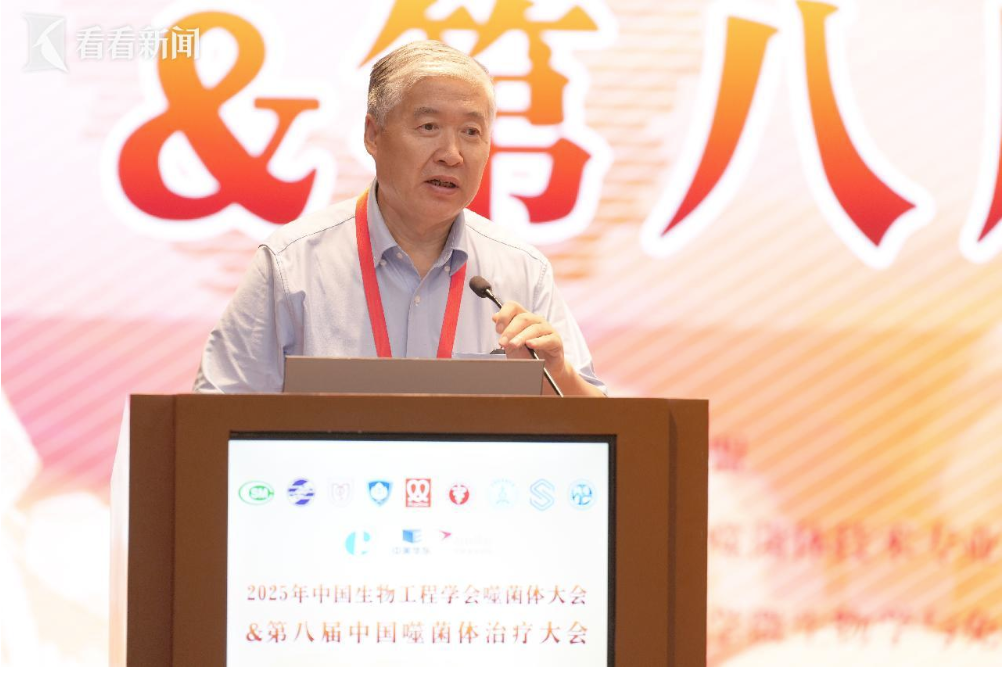
Concurrently, the conference hosted the second Bacteriophage Therapy “Seed Camp,” which provided comprehensive training covering fundamental phage theory, isolation and purification techniques, quality testing methods, clinical application standards, regulatory policy analysis, and case studies on translational applications. Through a model that combines systematic training and hands-on practice, the camp aims to cultivate emerging talent for the phage therapy field and advance China’s capabilities from theoretical research to broader clinical implementation.
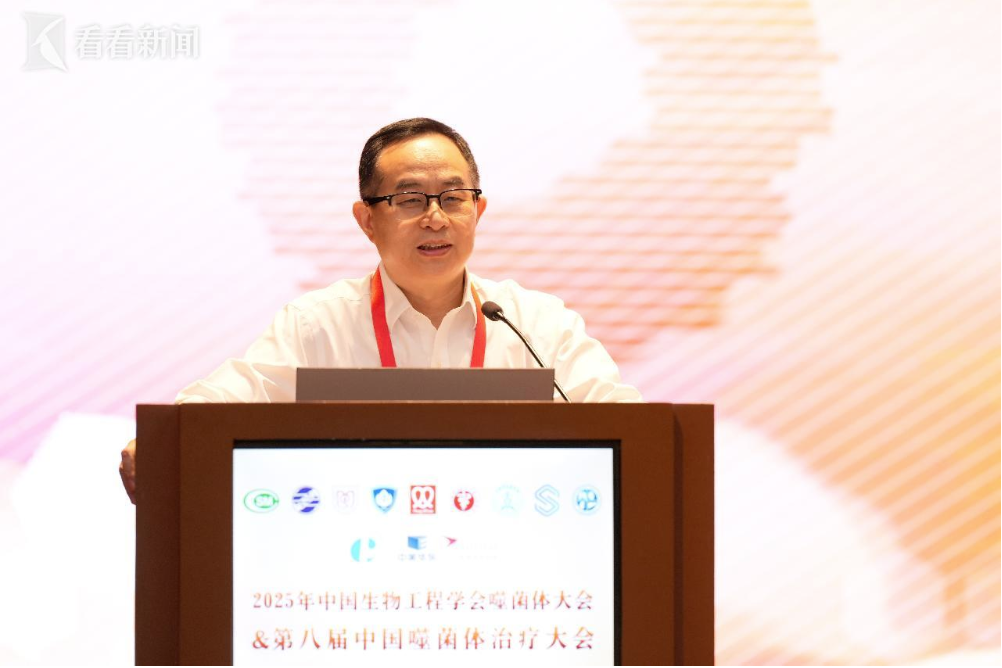
Professor Zhu Tongyu emphasized that global phage research has entered a phase of accelerated breakthroughs, with technologies such as AI screening expanding treatment possibilities. China has already achieved initial successes in areas including phage preparation development and personalized therapy. Regions like Shanghai have established an integrated framework coordinating research, clinical application, production, and regulatory efforts. He noted that this conference is expected to drive progress across multiple dimensions, such as mechanistic research and technical standards, helping to establish a cohesive “Chinese pathway” from laboratory to clinic that will benefit patients with drug-resistant infections.
Since its inception in 2018, the China Bacteriophage Therapy Conference has been successfully held seven times, attracting nearly a thousand experts from countries including China, Belgium, the United States, and Georgia, along with nearly ten thousand participants. It has become a benchmark academic platform in China for both basic and clinical phage research.