
Many diseases are caused by bacterial infections. Could bacteriophages be used to eliminate bacteria and treat these diseases?
Against the backdrop of rising global antimicrobial resistance, dwindling efficacy of conventional antibiotics, and the growing threat of “superbugs,” bacteriophage therapy—which specifically targets bacteria—has gained significant attention as one of the most promising alternative treatments.
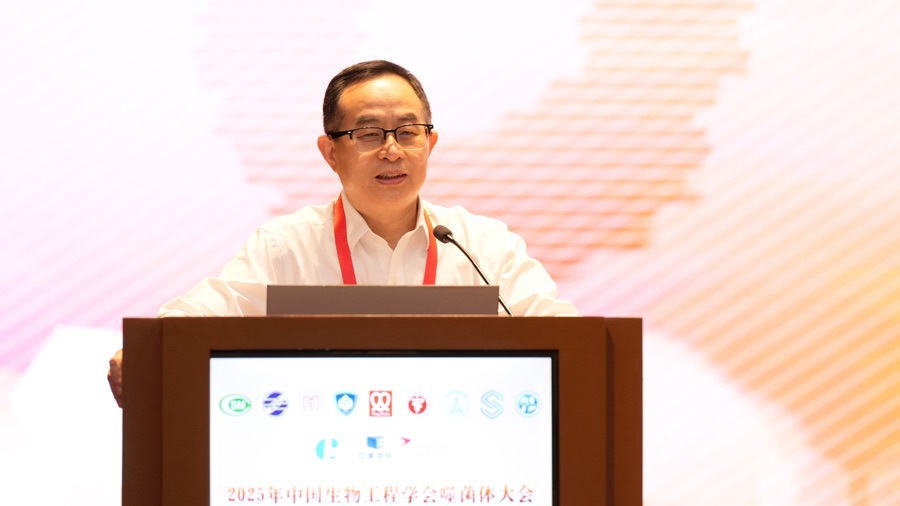

The 2025 Bacteriophage Conference of the Chinese Society of Biotechnology and the Eighth China Bacteriophage Therapy Conference were held from August 19 to 23 at Zhongshan Hospital, Fudan University. As one of the largest and most influential annual academic events in China’s phage research and clinical practice, the conference focused on advancing the phage therapy system. It marked the launch of two national key R&D projects and facilitated comprehensive academic exchanges and talent development, injecting “Chinese momentum” into tackling the global public health challenge of antimicrobial resistance.
Professor Zhu Tongyu, Vice Dean of Shanghai Medical College of Fudan University, Director of the Fudan University Phage Research Institute, and academic leader in kidney transplantation at Zhongshan Hospital, stated that global phage research has entered a phase of accelerated breakthroughs, with technologies such as AI screening expanding treatment possibilities. China has made initial progress in areas including phage preparation development and personalized therapy, with regions like Shanghai establishing a collaborative framework integrating research, clinical application, production, and regulation.
While antibiotics remain the first-line treatment for bacterial infections, the growing problem of antimicrobial resistance has prompted China—one of the countries most severely affected—to actively explore new approaches against drug-resistant bacteria. Phage therapy has emerged as a highly promising direction.
Bacteriophages, viruses that specifically “prey on” bacteria, possess unique biological characteristics. “They are resistant to acid and alkali and can maintain certain activity even at 4°C, providing a foundation for applied research,” Zhu explained. Phages target only specific bacteria, particularly drug-resistant strains, without affecting beneficial microbiota or causing dysbiosis—an advantage over antibiotics and a key factor in maintaining ecological balance.
Since 2018, Zhu’s team has embarked on a journey combining basic research and clinical exploration in phage therapy.
Five years ago, a patient underwent a kidney transplant, hoping for a new lease on life. However, three years later, fate struck another blow: an abscess formed below the abdominal wall, leading to a severe infection that required emergency treatment. Despite seeking help from multiple hospitals and trying various treatments, the patient’s condition continued to deteriorate until all options seemed exhausted.
Zhu’s team turned to phage therapy. During the treatment, the team closely monitored the patient’s indicators. As the therapy progressed, a miracle unfolded: the abscess gradually shrank, inflammatory markers decreased, and the patient’s overall condition improved until they eventually overcame the illness.
This case is not unique. To date, the research team has treated approximately 300 patients, continuously refining treatment protocols to enhance the efficacy of phage therapy.
During the conference, the 2025 National Key R&D Program “Frontier Biotechnology” Phage Special Project was launched, comprising two major initiatives: “Development of Safe and Efficient Engineered Phage Therapy Technologies and Clinical Research,” led by Zhongshan Hospital, Fudan University, and “Research on Key Technologies for Developing Safe and Efficient Phage Preparations and Clinical Treatment of Drug-Resistant Infections,” led by Beijing University of Chemical Technology. These projects bring together government, industry, academic, and research sectors, marking China’s transition from laboratory exploration to systematic clinical validation in phage therapy. This effort will accelerate the industrialization and standardization of phage therapy in China and promote the development of internationally influential Chinese solutions.
The conference also featured the second Bacteriophage Therapy “Seed Camp,” covering the entire workflow from basic phage theory, isolation and purification techniques, and quality testing methods to clinical application standards, regulatory policy analysis, and translational case studies. Through a combination of systematic training and practical implementation, the camp aims to cultivate new talent in the field and advance phage therapy from theoretical research to clinical practice.
Since its inception in 2018, the China Bacteriophage Therapy Conference has been successfully held seven times, attracting nearly a thousand experts from countries including China, Belgium, the United States, and Georgia, along with nearly ten thousand participants. It has become a benchmark academic platform in the field of basic and clinical phage research in China.
Edited by Lu Zihua